What a Brand Visual Strategy Actually Delivers
Article Contents
A brand visual strategy is a practical direction system that tells you exactly how your brand should look, feel and communicate, so every piece of content you create works harder and takes less time.
Your product is good. You know that. Your customers know it too, once they find you. But somewhere between the quality of what you make and the way it appears online, something is getting lost.
The photography looks different from week to week. Your packaging says one thing, your Instagram says another, and your website sits somewhere in between. Every time you create content, you are starting from scratch, second-guessing colours, angles, backgrounds and tone. It is exhausting, and it is costing you more than time.
The real problem is direction, and a brand visual strategy is how you solve it.
Free Download: Content Lab Challenge
5 days. 20 minutes a day. Build your content rhythm from scratch.
What It Actually Is
A brand visual strategy is a documented system that defines how your brand should look and communicate across every touchpoint. It covers visual direction, imagery style, messaging rules and content structure, all built around your specific product, audience and commercial goals.
Think of it as the rulebook that sits behind every piece of content your brand produces. Clear parameters that make decisions faster and results more consistent, with plenty of room for creativity inside them.
It is not a logo redesign. It is not a rebrand. If your brand identity already works, a visual strategy builds on what you have and gives it structure. If your identity needs attention, a visual strategy will make that clear before you spend money in the wrong place.
And it is not the same as having good photography. Professional photography is one tool inside a wider strategy. Without direction, even beautiful images can pull a brand in different directions.
Who It Is For
This work is built for product brands. Specifically, small to medium businesses selling physical products: skincare, jewellery, accessories, artisan food, gifts, craft goods. Brands where the product is premium but the visual presence has not caught up yet.
You will recognise the feeling. Competitors with less substance somehow look more established online. Stockists are slow to respond. Press coverage feels harder to land than it should. Customers who do buy love the product, but the visual first impression is not converting browsers into buyers at the rate the product deserves.
A visual strategy works best when you know what you sell and who you sell it to. That can be well before launch. Setting the direction before the first shoot, the packaging run and the website build means you arrive consistent from day one rather than correcting course later.
The same principles hold for experts and organisations building authority through content. If you are producing a podcast, a course or thought leadership, visual consistency builds the recognition that earns trust over time. The starting point is different, though: for that work, the Flagship Content Blueprint covers the strategy, the visual direction and the production plan together, built around you and your expertise rather than a product range.

What You Walk Away With
This is the kind of strategy document that gets opened every week. The deliverables are practical and immediately usable.
Visual direction: Defined rules for colour, typography, layout and composition, firm enough that every piece of content your brand produces feels like it belongs to the same family.
Imagery system: Specific direction on lighting, backgrounds, styling and mood for photography and video. Including clear examples of what works and what does not, so that anyone creating content for your brand can follow the standard.
Messaging guide: Voice rules, storytelling prompts and hooks that connect your visual identity to the language your brand uses. Because visuals and words need to work together.
Content playbook: Content pillars, an idea generator and campaign brief templates. The structure that turns “what should we post this week” into a system you can run without overthinking.
Implementation plan: Prioritised next steps so you know exactly where to start and what to tackle first.
Because we build the strategy and produce the work in the same studio, the direction is written by the people who will be behind the camera, and it holds up in production rather than in theory.
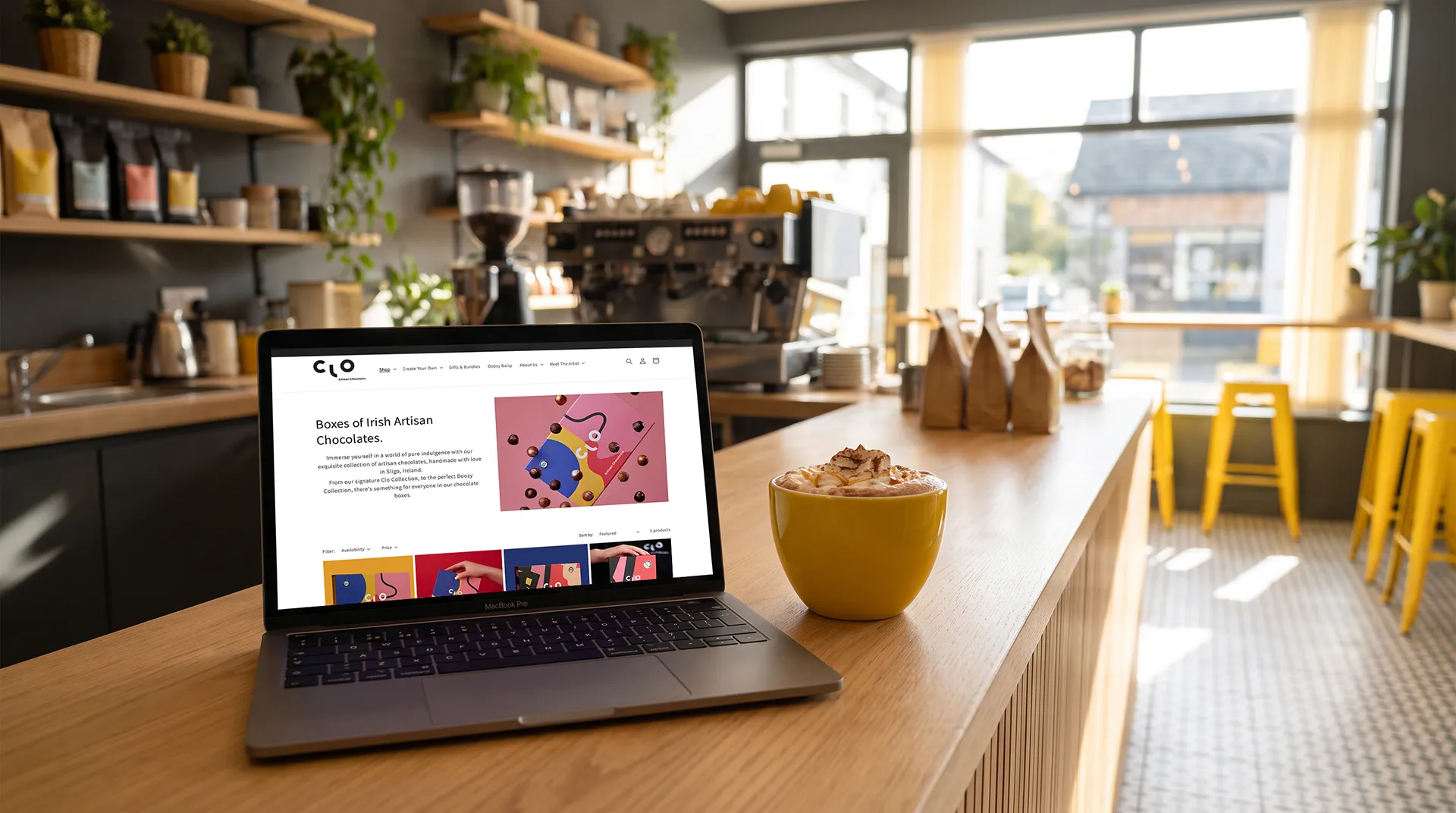
When Clo Chocolates came to us, the product was exceptional but the brand presence was not matching that quality. We clarified the visual identity and built a consistent direction, and the results followed: catalogue placements, new stockists and press features. The perception finally caught up with the product.
The same shift shows up across product categories: a strong product behind an online experience that undersells it. Rebuilding the brand presence around curated visuals and one consistent direction changes how customers experience the brand before they ever touch a product.
How It Works
The process is deliberately light on your time. It starts with an intake questionnaire and a review of your existing assets, so we arrive at the first session already knowing your brand. Then comes a brand audit and clarity session, where we look at what is working, what is diluting the message and where the gaps are.
From there we build the visual framework: colours, type, layout logic and imagery approach, documented against your product and commercial goals. You get one round of refinement before handover, and the whole engagement typically runs two to three weeks from completed intake.
For brands that want the strategy running day to day, the Content Engine is the next step: a hub built around your brand playbook, with templated briefs and AI tools we configure to your voice and visual rules, so your team can produce on-brand campaigns, posts and assets without second-guessing every decision. It is a complete engagement in its own right, and brands whose direction is already clear come to it directly. After a brand visual strategy, it builds on the Visual Direction Document you already have. And when new imagery is part of the plan, strategy, system and production can run as one aligned project in our studio.

What Changes After the Work Is Done
The most immediate change is speed. Content creation gets faster because the decisions are already made. You are not starting from scratch each time you sit down to create, wondering what to post and how it should look. The direction is set. You execute.
The second change is consistency. Your website, social channels, packaging and marketing materials start to feel like one brand. Brands that hold visual consistency across every platform are easier to recognise, easier to trust and easier to buy from. Marq’s State of Brand Consistency report puts numbers on it: consistent brand presentation can lift revenue by up to a third, and 68% of businesses credit consistency with revenue growth of 10% or more. That consistency is a commercial asset as much as a design decision.
The third change is perception. When your visuals match the quality of your product, the right people start to notice. Stockists respond faster. Press enquiries come more naturally. Customers convert with less hesitation because the presentation has already done the work of communicating value before they read a single product description.
What you need is clearer direction, and that is exactly what a brand visual strategy delivers.
If your product deserves better than what your visuals are currently communicating, a brand visual strategy is the starting point. You can explore what is included and book a consultation, or get in touch to talk through what would work for your brand.